
Ideas That Find Us
On creativity, collective intuition, and learning to trust your own timing

A NOTE: This newsletter is available for free or for $5 a month. If you can subscribe, it goes a long way for me. Thank you for reading!
Have you ever watched a movie, read a book, or heard a business concept and thought, “I literally had that exact idea”?
In 2024, I spent much of the year researching and writing—immersing myself in intimate letters, postcards, and press releases that once belonged to the owner of the first gay bookstore, Craig Rodwell. I was preparing to write a biography of his life. As soon as I was ready to query publishers, another author had already written it.
At first, the experience felt strangely personal, like I had missed a small door that was now closed shut. But the more I sat with it, the more it felt less like failure and instead like opportunity. There was something here to learn about timing, about ideas, about how creativity can move through multiple people at once. It was oddly hopeful.
In The Creative Act: A Way of Being, Rick Rubin describes artists as conduits for a collective knowledge—this human knowing that we pull inspiration and ideas from, rather than something purely ego-driven or individual. Artists, in this way, help us understand the most challenging emotional and political realities because we’re all responding to similar undercurrents.
To put it plainly, when an idea is ready to emerge and express itself, it will. It doesn’t care if you want just a bit more time to process it. The world needs to hear it, and there are plenty of artists willing to latch on and make it happen.
I spent a lot of time on this idea—the biography. I thought about it for years, questioned whether I was the right person to write it, waited months to schedule interviews. I circled it more than I moved it forward.
Procrastination is one form of self-sabotage, or, as I’ve learned to appreciate it, a lack of self-trust.
I was working on this project alongside the anticipation and release of my first book, Generation Queer. I was (and am) immensely proud of this book, but I was—like all artists—a bit self-conscious. How would it be received? And more complicated, it came out only months into this administration’s second presidency—one known for its cruelty and a particular disdain for queer books. More than ever, my work became the target of conservative blogs and social media posts.
It can be difficult to trust your creative instincts when you feel watched by unkind eyes. And I think that uncertainty seeped into my process more than I realized.
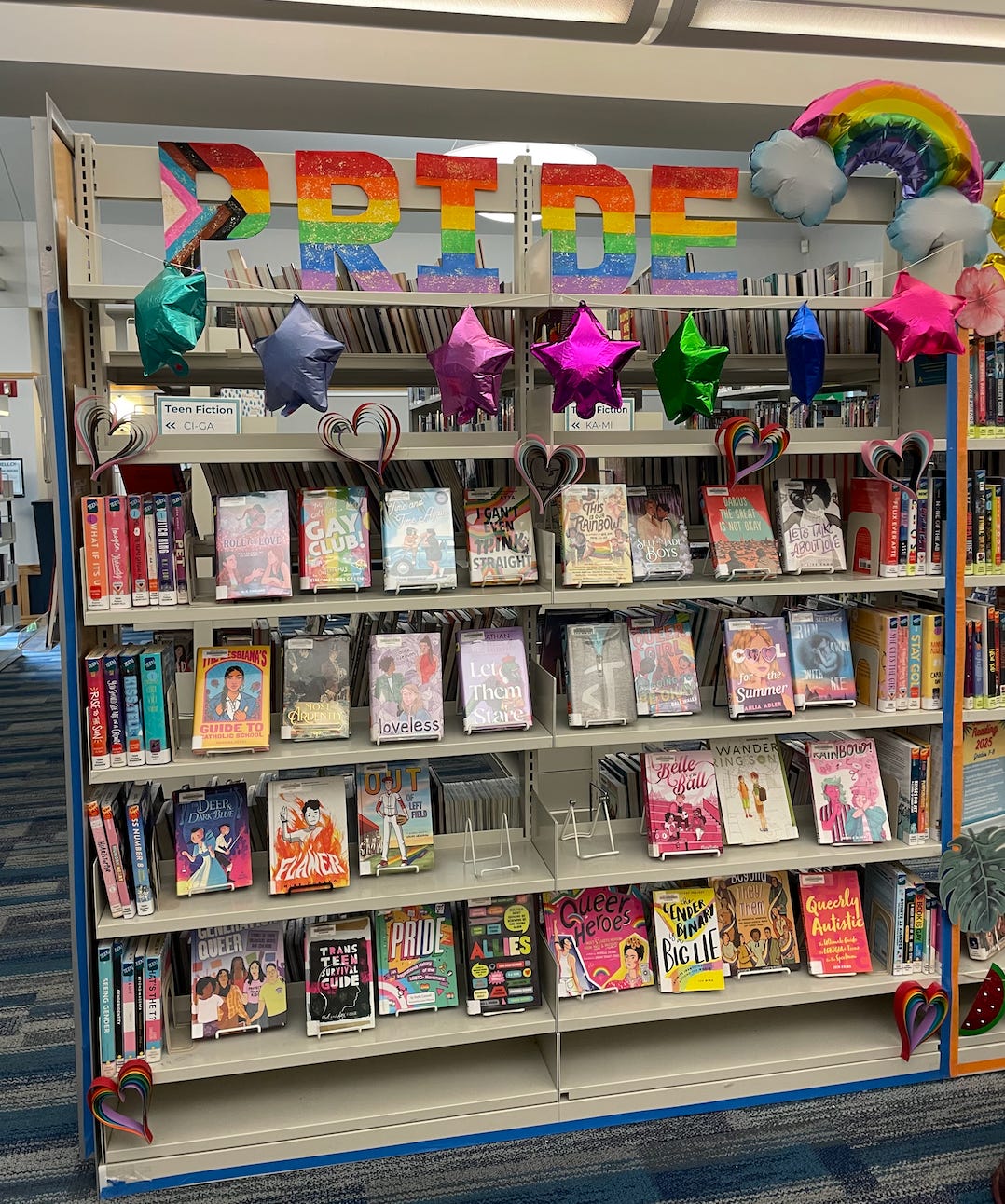
And yet—at the same time—so many good things were happening. Gentle, human, irrefutably good things. Every conversation I’ve had with a young person, educator, parent, or lover-of-reading since Generation Queer has been an absolute gift. At one event, I watched a teenager find their copy, pull a chair into the corner of the classroom, and read for hours, completely absorbed. I remember thinking: this is the whole point.
But our brains aren’t always wired to hold onto those moments.
Psychologists call it negativity bias—the idea that bad experiences stick to us more than good ones. Some research says it can take five, even seven positive interactions to outweigh a single negative one. Which meant that one cruel article on X could suddenly drown out dozens of generous conversations. Intellectually, I understood the math. Emotionally, though, the loudest voice kept winning.
Lock Your Phone In A Safe
There’s also a kind of collective knowledge that exists within marginalized groups. Queer knowing, for example. Nearly all the friends I clung to in high school ended up coming out after we graduated. We had a gravitational pull toward each other—knowing that we understood something about ourselves, each other, and society without having to say it out loud. An ease of connection. A shared frequency. Call it “gaydar” or call it intuition. Either way, it’s exceptional.
So when I watched friends and colleagues (and myself) panic on social media—catastrophize, retreat, blame—that collective feeling took on a new silhouette. The fear felt contagious. And every time I set out to work on new projects, I found myself wondering what actually needed to be said, heard, or understood in this moment. Was this the story? Or should I focus my attention elsewhere?
As I felt my shoulders creeping up, my heart rate increasing, my thoughts racing while staring at this glowing rectangle in my hand, I kept wondering whether social media was doing damage to my mental health (more than I cared to admit). I finally set it down in mid-October of 2025. Tucked away for a week, accounts deactivated, mind to myself. What changed within me—and around me—quickly became my newest preoccupation. And once again, it didn’t feel like a private realization so much as something happening collectively.
At a cafe, two women discussed whether they should leave Instagram, and chronicled the timeline of how this thing incrementally seeped into their lives. “Well, at first Instagram was so wholesome. Then, everyone was on Snapchat, and obviously TikTok during the pandemic. Now, I don’t know how it happened, but I think I’m on social media for five or six hours a day.”
On NPR, a segment about Australia’s new policy to ban social media aired. Educators and Gen-Zers called in saying “I hope they pass a similar policy here.” YouTube videos explaining the benefits of a “digital detox” went viral, featuring creators locking their smartphones in a safe or buying a flip phone. In nearly all my conversations, casual mentions of phone addiction started popping up.
It feels like many of us are arriving at the same question at the same time, or have been here for quite a while.
Turning off the phone, and setting aside all the noise that comes with social media, allowed for renewed experiences of observation, curiosity, and quiet. New tests of self-trust. Can I get through a walk without my phone? Can I go another day and just see how it feels? What if I turned this thing off, stashed it in my desk drawer, and didn’t look at it again for a whole year? Maybe this was the antidote, or at least an entry point.
Child-Like Wonder and Playful Banter
Last week, I set out to finalize a new proposal on gay bookstores and discovered there’s one coming out in May. Another idea I had waited on too long. Not gone, exactly—just already claimed.
The research will carry on. There will be other creative ways to share it. That book is needed, and I genuinely can’t wait to read it. But each instance of waiting, pausing, or allowing outside voices to direct my creativity has left me with a new perspective—and an urgency.
Not a scattered, impulsive kind of urgency, but a steadier one that asks you to trust yourself. To keep at it. To develop a gratitude for possibility.
I’m taking a new approach now: writing daily, sharing often. Trying. Jumping at ideas. Adopting a child-like wonder about anything that makes me curious. Engaging in playful banter with the critic-voice.
I hear a recurring pause and hesitation from writing clients lately: Should someone else write this? Am I the right person?
You are. The idea—the one that made its way to you somehow—is yours to carry if you choose. It’s not a coincidence that this particular idea moves you.
This week, I introduced Life After Algorithms, and I’m excited to share research, observations, and creative writing with you. Thank you for being here.
If you join as a paid subscriber, you’ll gain access to longer-form pieces, as well as resources and tools for your writing, historical, or creative practice.
COMING UP: A guide to writing opportunities you can apply to this February.
OPPORTUNITIES TO CONNECT
I’d love to write, create, and learn with you. Drop a message here.
If this essay got you thinking about your creative practice, I invite you to:
Explore the Breaking the Block workbook full of prompts that build your self-trust and interrupt the stuck-ness
Sign up for my You Are A Writer! course, and add coaching sessions at your own pace
Pitch your work to Floriography—submissions are rolling, so submit any time
Outline your nonfiction book proposal with this workbook, and reach out for an edit once you’re ready
Join the Lavender Letters community for a monthly snail mail delivery
I really appreciated and resonated with this read, Kimm! I remember in college when I quickly learned that none of my ideas were novel (lol), that everything that I was thinking had been thought before by people who were seemingly more poignant, educated, worldly, experienced, poetic, etc.
At first it was discouraging and a shock to my ego (especially with my degree being in Philosophy & Public Policy). I remember talking about this with an ex (in true queer fashion), and I said "Everything I want to say has already been said before." Their response is something that has always stuck with me. They said, "But it hasn't been said by you."
Thank you for what you shared. Even if all of it has been said before, remember it hasn't been said by you. Love, MG