
Make Art Anyway
Stonewall workshops, a brief history of blackout poetry, and art as an act of queer presence

A NOTE: This newsletter is available for free or for $5 a month. If you can subscribe, it goes a long way for me. Thank you for reading!
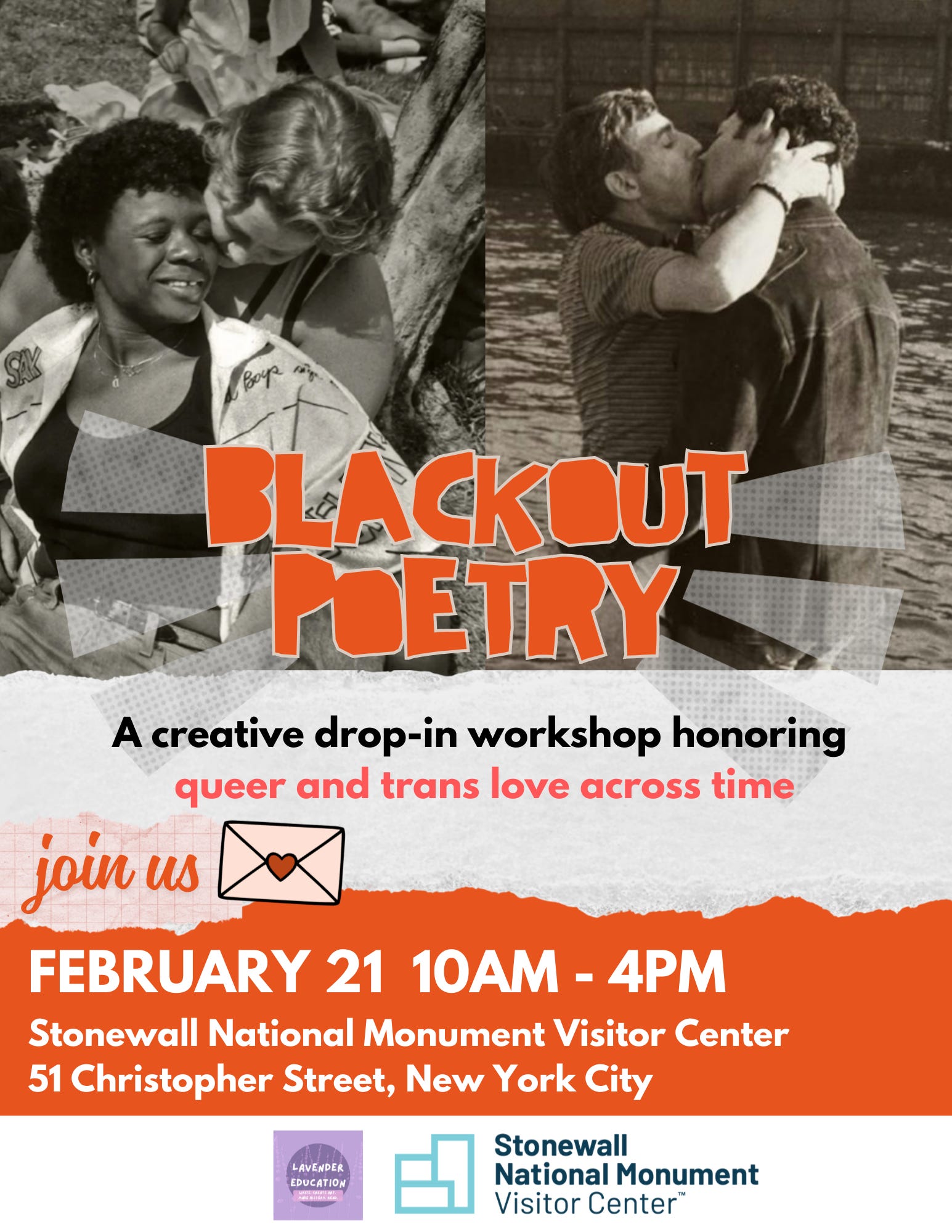
TL;DR: Join us at the Stonewall National Monument Visitor Center on Saturday, February 21st for a free drop-in blackout poetry workshop! Register here, or simply stop by any time between 10AM-4PM.
Art can be a place for us to heal and reset. To find peace. To say what we need to say. To repair something broken. To come back to ourselves.
In November, I was grateful for the opportunity to host a “Collage Rebels” workshop at the Stonewall National Monument Visitor Center, a non-profit that preserves the history of the 1969 Stonewall Rebellion.
In my visits there as a museum-goer, I’ve popped a token into the jukebox curated by Honey Dijon to sway and sing along to Marvin Gaye while learning about the moments leading up to the Rebellion, carefully told along the walls. Mothers of S.T.A.R., founders of Christopher Street Liberation Day, and contemporary artists seem to move alongside you as you learn.
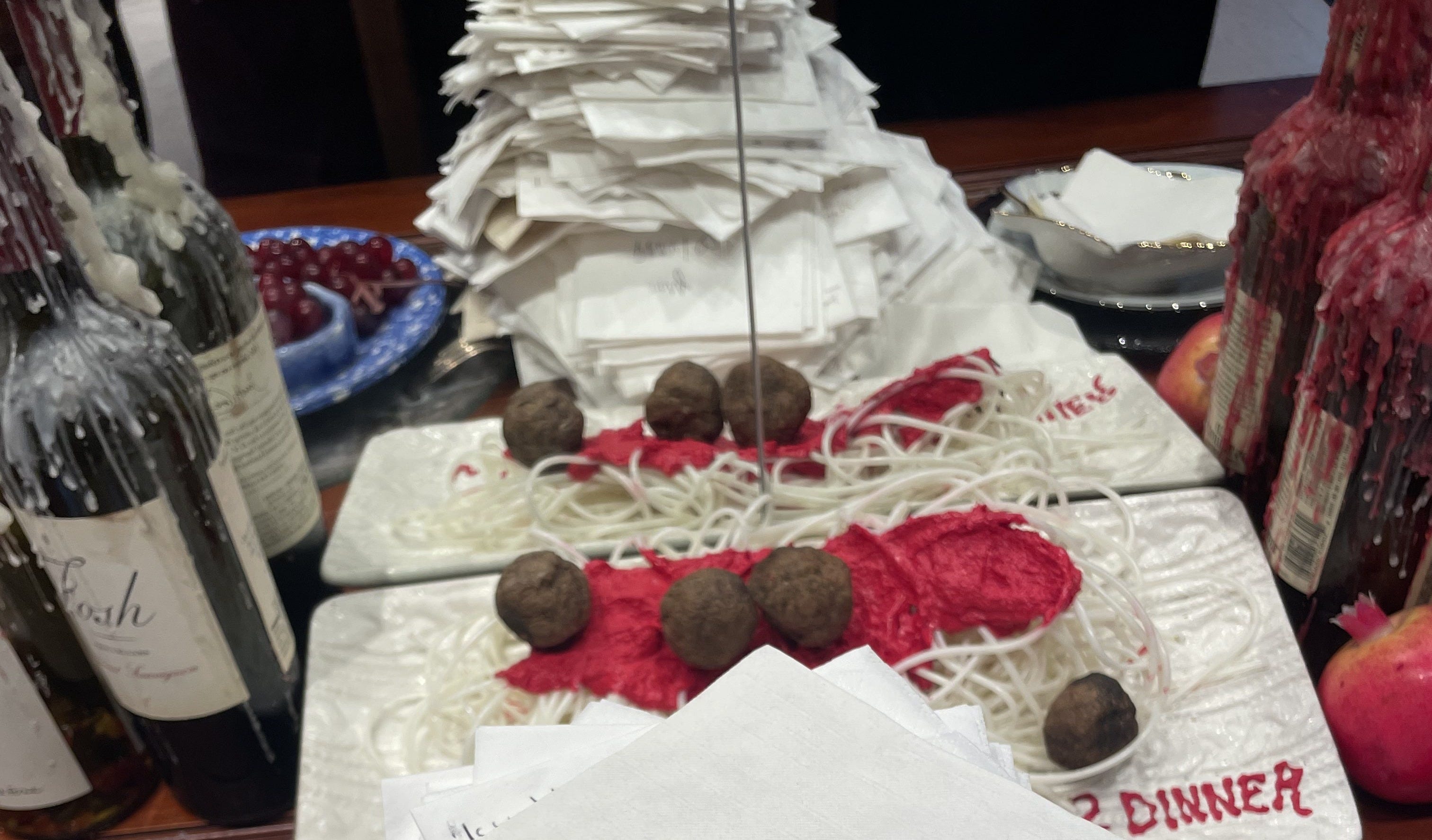
In October, we attended a special screening of the Queer Lens series—Transcending Film—where trans filmmakers reflected on their works about love, aging, dance, and hockey. While preparations were underway for the event to begin, I stopped at the temporary exhibit, “Setting the Table,” which asks, “Who would you invite to dinner, dead or alive, and why?” and left an inked-napkin in honor of a friend and mentor who recently passed.
At the collage workshop in November, I was moved by how many people wandered in unsure of what they’d find—and left in tears, or hugs, or wide smiles. Evidence of how deeply a place like this can affect you. A single stop on a fun-filled Saturday in the Village carried unexpected weight.
A couple from Brazil celebrated their surprise proposal. “I’ve always wanted to come to New York City, so this was perfect,” the surprised one said, before they both immersed themselves in collage-making.
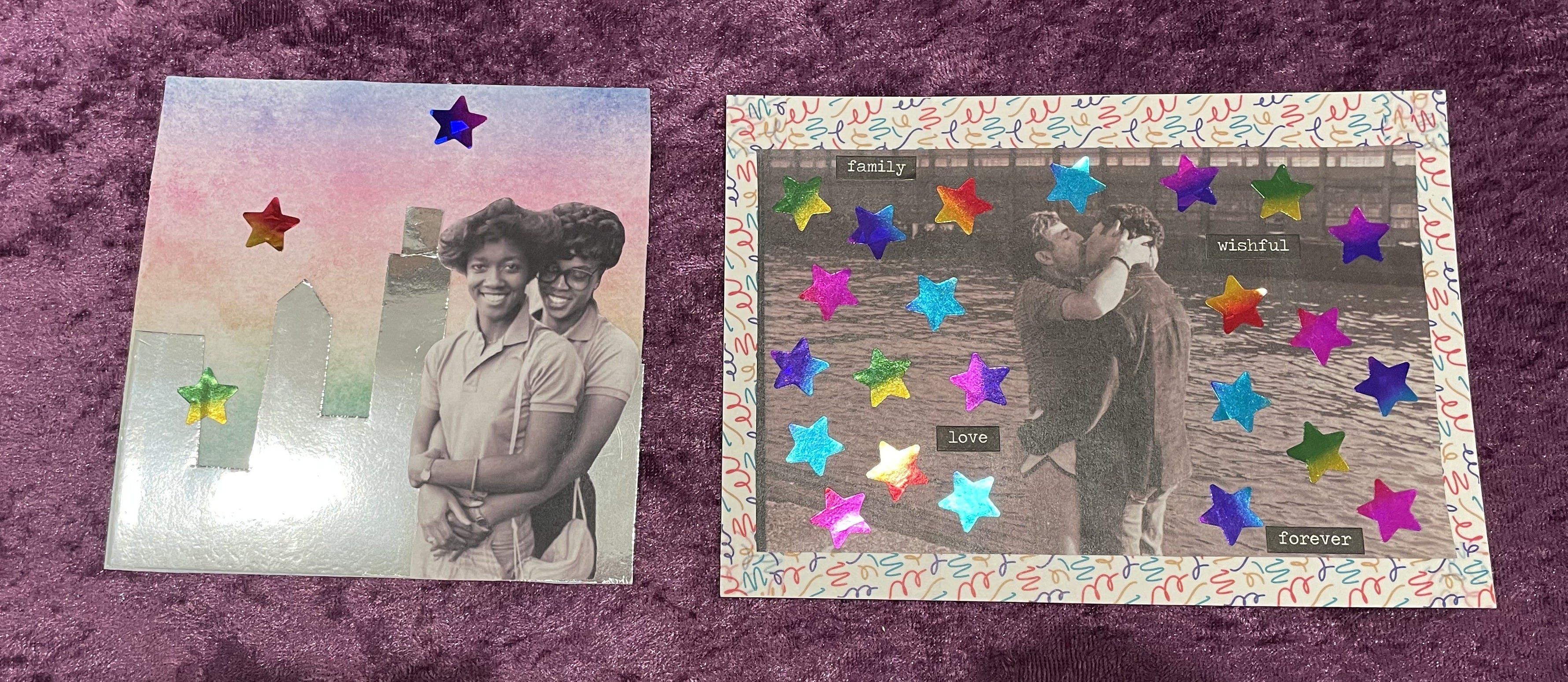
Later, a group of high school students filled the space. Their first stop on a trip from California was the Visitor Center. The teachers told me about the school’s ethos and how a trip like this became possible. The students crafted and joked, calling out their deli orders while pasting down the final scraps and cut-out images.
More couples, friends, and parents drifted through—some quiet, others wanting to talk about what it felt like to make art. One couple from Kentucky laughed, “We’ve gotta do this all the time!” They talked about feeling present, in a flow, off their phones for once. Another visitor considered the activity but chose to sit and think instead, processing what they’d learned in the Center and how seen it made them feel.
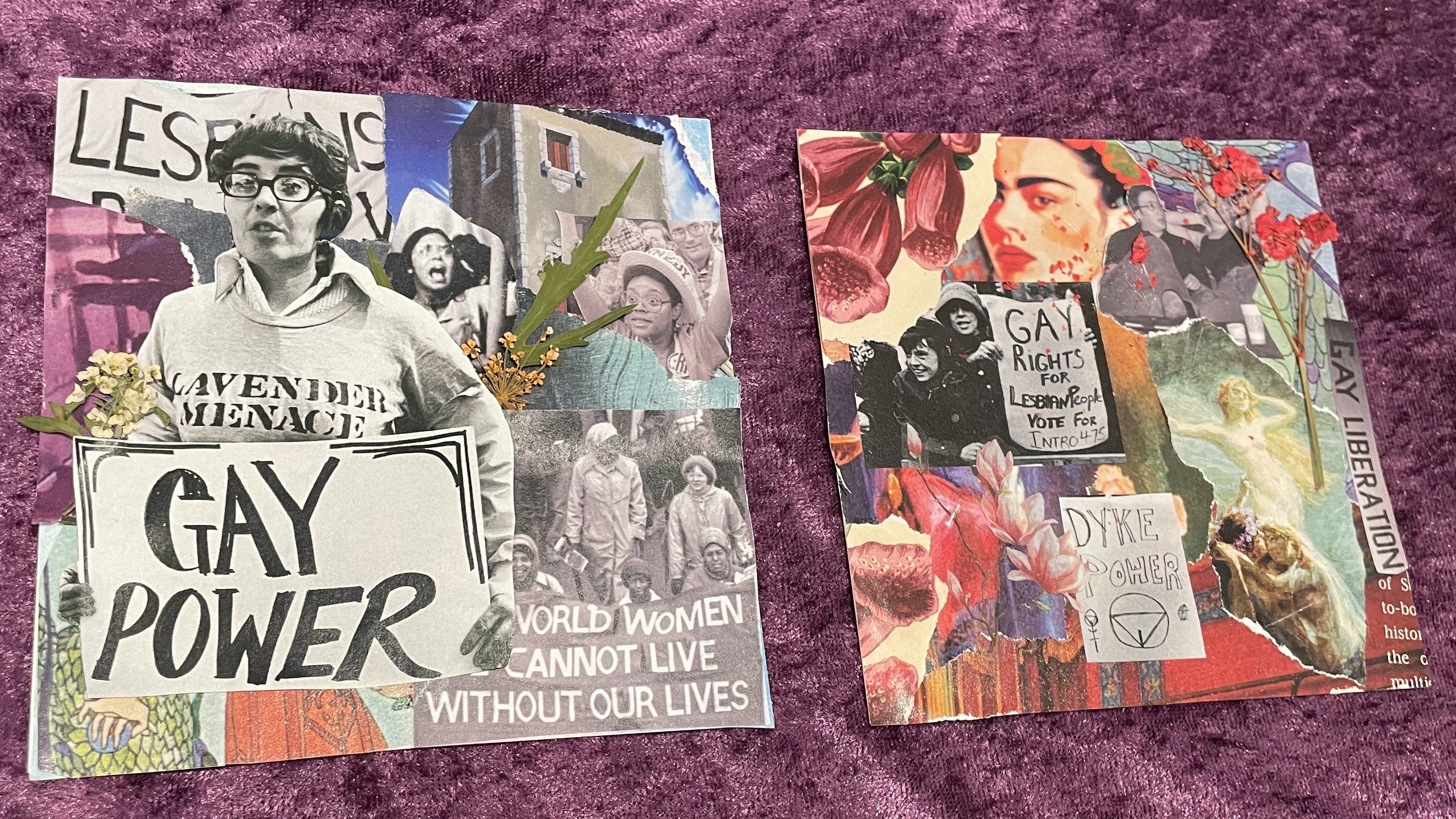
The melding of history, creativity, and connection made so much possible in the span of a six-hour day. The flags hoisted outside in the park served as bright invitations for passers-by. What’s happening here? they might have wondered, and stumbled in. Meanwhile, school groups, couples, and families had previously crafted carefully planned itineraries—looking forward to stepping into this place.
Many fantasized about a space like this for years or decades, before it even seemed possible.
This week, the Pride flag was removed from the federal grounds of the Stonewall National Monument—the first monument dedicated to LGBTQ+ rights in the nation, designated in 2016. The Stonewall National Monument Visitor Center at 51 Christopher Street, operated independently by Pride Live, continues its programming and will continue to display Pride flags.
The removal of the flag from federal property is a symbolic move of cruelty from the administration, yet again. Earlier this year, the administration scrubbed references to transgender people from National Park Service materials.
“The Pride flag was removed from Stonewall for one reason: to further erase queer and trans people from public life. Stonewall marks a moment when queer and trans people fought back and demanded dignity — its very existence poses a threat to an administration hellbent on employing state violence against anyone who does not look, pray, or love like them… The 1969 Stonewall Riots, on Christopher Street, showed us that queer and trans people can’t be erased — because the more they tried to silence us, the louder we got. Our history is not theirs to erase. We are resilient, and we will not be shoved back into the shadows.”
— Tyler Hack of the Christopher Street Project, from CBS News
The flag itself is a work of art—created by Gilbert Baker, Lynn Segerblom, and James McNamara, plus thirty volunteers, in 1978. The transgender flag, designed by Monica Helms—a trans woman and Navy veteran—first debuted in Phoenix in 2000. Many flags have followed, each one a recognition of the many identities and micro-communities that make up the breadth of human experience.
This denial of expression isn’t only symbolic. It’s erasure. Something our community knows all too well.
So why not play with the concept a bit?
I designed an upcoming blackout poetry workshop for the Visitor Center before this decision to remove the flag became reality. But now I can’t help noticing the parallels between this erasure and the opportunity of this art form.
Long before it showed up on Instagram feeds or Sharpie-covered book pages, writers were already experimenting with what it meant to make something new from what already existed.
In the eighteenth century, people were publishing “redacted” texts; during World War I, Dada artists like Tristan Tzara cut up newspapers and reassembled them as a way to protest violence and propaganda. The creative practice was radical: take the language that surrounds you—the language intended to shape you—and rearrange it until it tells a truer story. Break one thing open to make something honest.
In blackout poetry, the original text is still there, just obscured, held in tension with what remains. I love that metaphor: nothing disappears completely; we choose what to illuminate. For nonfiction writers especially, it becomes a way of reclaiming inherited language—crossing out instructions, headlines, histories that don’t fit—and revealing the narrative we needed all along.
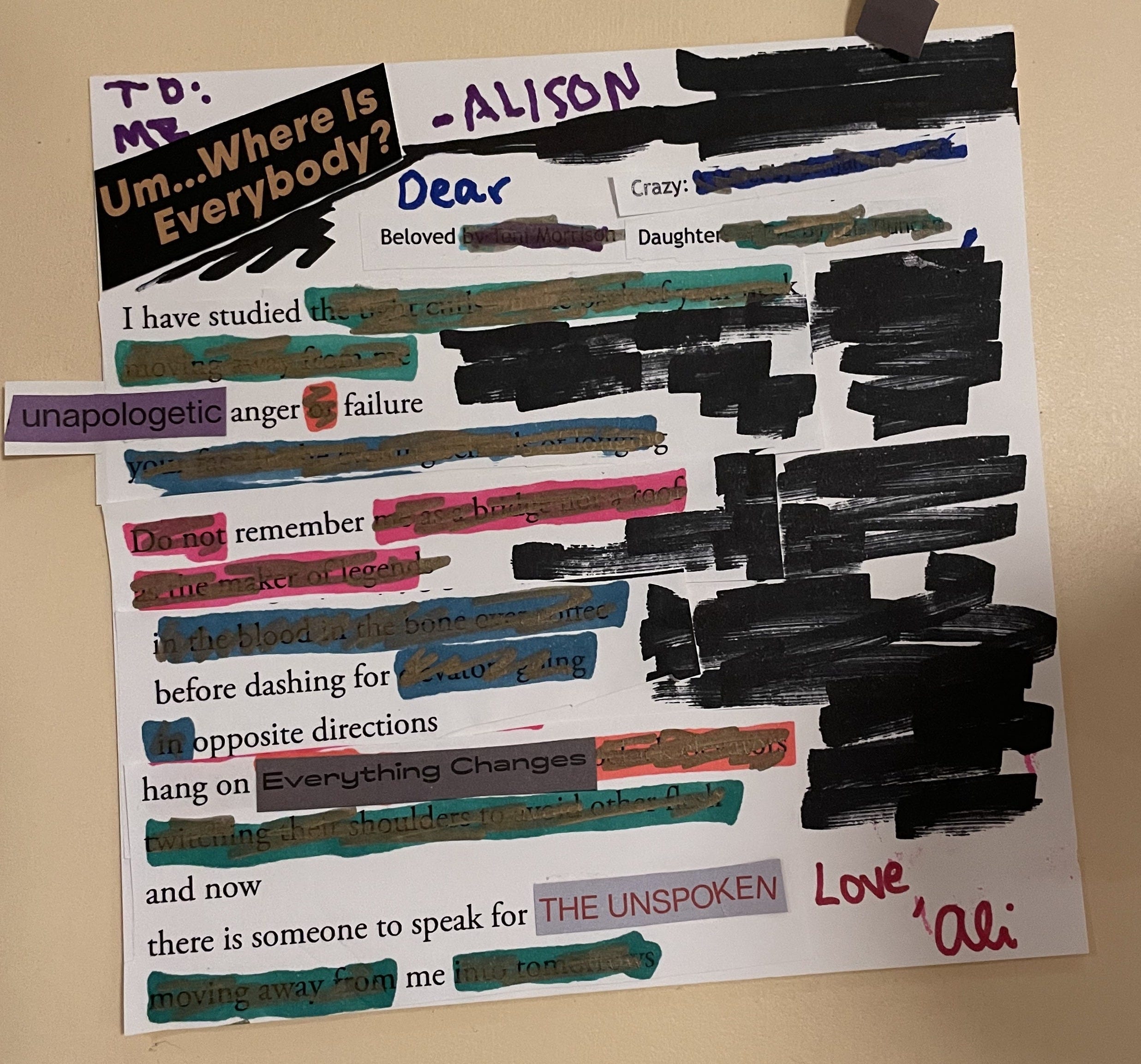
So next weekend, while the Visitor Center is open, you can find Lavender Education in the theater hosting a pop-up workshop that celebrates love. Think of it as a belated Valentine’s Day gathering—an invitation to create something beautiful motivated by love.
It’s free (as is admission to the museum), and you’ll leave with your artwork tucked into an envelope. Make something lovely for yourself. Or to share with someone you care about. Or, if you feel called, join us in defiance—doing what queer people have always done: making art anyway. Finding each other anyway. Creating beauty anyway.